
What pages does a B2B manufacturing website need? A structure buyers and AI can both read
A manufacturing website doesn't need many pages, but every page has to answer one question a buyer has. This article lists the 7 basic pages of a B2B website, what each should say, and the technical foundations that let Google and AI read it. The overview of our B2B website series.
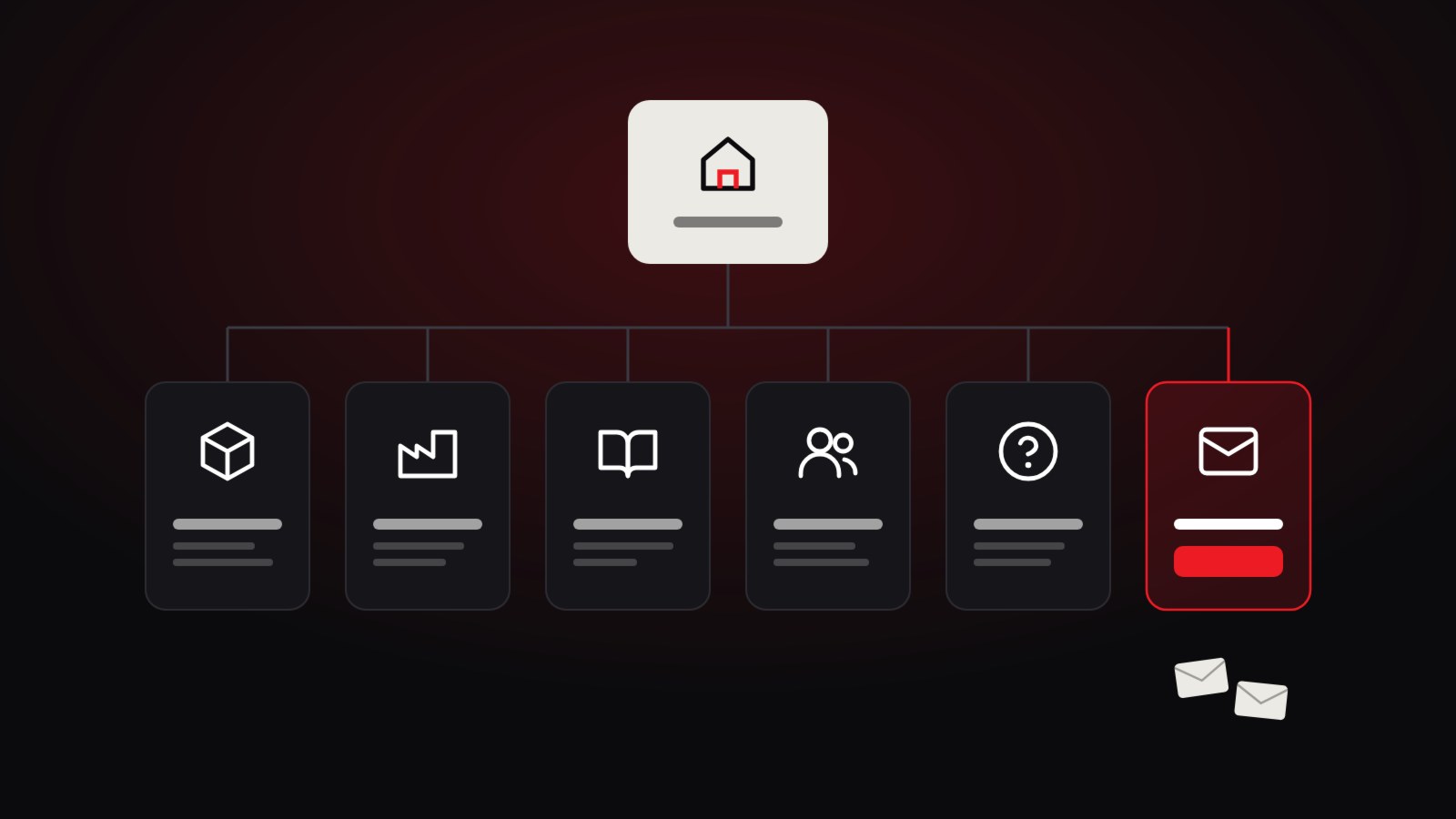
A B2B website has one job: help the right buyers find you, understand you, and send an enquiry. It doesn't need many pages, but every page has to answer one question a buyer has. This is the overview of TAITAN's B2B website series: first the structure, then the technical foundations, with a separate article for each detail.
The short version
- The 7 basic pages of a manufacturing website: home, products (or process capabilities), industry applications, catalogs, about us, an answers page, contact and enquiry.
- Every page opens with one sentence that says what the page is about. Buyers and AI both judge the page by that sentence.
- The technical foundations decide whether Google and AI can read you: text content, internal links, structured data, speed, security.
Four things a buyer wants to know on your website
- What do you make? Products, processes, range of capabilities.
- Can you make what I need? Materials, sizes, tolerances, capacity, lead time.
- Can I rely on you? How long you've been doing this, which industries you've served, which certifications you hold.
- How do I contact you?
Every page on the website should map to one of these questions. A page that maps to none can usually go.
The 7 basic pages
| Page | The question it answers | Must have |
|---|---|---|
| Home | Who you are, what you do, where | A one-sentence positioning, main product lines, a way to enquire |
| Products / capabilities | Can you make it | One page per product line, specifications as text |
| Industry applications | Do you know my industry | One page per industry, about the problems you solve there |
| Catalogs | Are the full specs available | Every page searchable, not just a download button |
| About us | Can I rely on you | Founding year, location, equipment, certifications, team |
| Answers page | The detailed questions | One question, one answer |
| Contact / enquiry | How to start | Form, phone, email, address |
Home: the first sentence decides everything
At the top of the home page there should be one sentence that tells people who you are, what you do, where you are and who you serve. That sentence is also the one AI will most often use to introduce you. Words like "professional, quality, service" are true of any factory, which means they say nothing.
Product pages: one product line per page
Buyers search with specifications. Give each product line its own page and write out materials, size range, tolerances, surface treatments and minimum order quantity as text. A job shop with no fixed products writes up "process capabilities" instead: which machines, what precision, how small a batch you accept.
Industry application pages: in the buyer's language
An automotive parts buyer and a semiconductor equipment buyer care about different things. Give each main industry its own page about what that industry usually requires and how you meet it. When a buyer asks AI "who makes fasteners for auto parts?", this is the page that gets cited.
Catalogs: more than a download button
The catalog is usually the richest thing on a website, and the most often wasted. How to do it: Can Google and AI read the PDF catalogs on your website?
About us: where credibility is written
The year you were founded, where the factory is, which machines and certifications you have, who runs the company. Google treats trust as the most important part of content quality, and this page is where you prove it. Facts that can be checked (certificate numbers, patent numbers) are far stronger than adjectives.
An answers page: the format AI loves to cite
Minimum order quantity, lead time, whether you can build to drawings, how quoting works. One question, one answer: buyers find what they need themselves, and AI can quote the whole paragraph. More on how to write it: What kind of content does AI cite?
Contact and enquiry: tell buyers what to attach
Keep the form short, but say clearly that a quote needs the drawing, the quantity and the target delivery date. If buyers send everything at once, you save a round of back-and-forth.
Technical foundations that let Google and AI read you
In "AI features and your website", Google lists several recommendations that apply to both regular search and AI Overviews. On a company website they mean:
- Crawlers can get in: robots.txt and server settings don't block Googlebot; to appear in ChatGPT search you also mustn't block OAI-SearchBot.
- Important content is text: not only in images and scans.
- Internal links: content can be found through links within the site. Product pages link to related industry pages and catalogs, and every page has a way to enquire.
- Structured data matches the page: see What is structured data?
- Page experience: easy to read on a phone, quick to load.
- Security: HTTPS and security headers; see What are website security headers?
The three most common mistakes
- A home page with one big slideshow and a slogan, after which a buyer still doesn't know what you make.
- All products crammed onto one page, or all in PDFs, so search engines and AI can't tell what you're strong at.
- A contact page with just an email address, no form, and nothing about what a quote needs.
How Ditto does it
Websites made with Ditto are designed from scratch, with SEO, structured data and security headers built in from the start. Catalog PDFs are turned into an image and text for every page when uploaded, and the built-in AI assistant answers visitors around the clock, collecting the questions it can't answer into a list for you to fill in. To find out what your current website is missing, start with a Free Website Check, or book a 360° Diagnosis.
Further reading
B2B website series:
- Can Google and AI read the PDF catalogs on your website?
- What are website security headers, and what does A+ mean?
Other series: What is GEO?, What is structured data?
References
- Google Search Central. AI features and your website.
- Google Search Central. Creating helpful, reliable, people-first content.
- Google Search Central. SEO Starter Guide.
- OpenAI. Overview of OpenAI Crawlers.