
What is GEO? How it differs from SEO, and where a B2B company should start
GEO (generative engine optimization) gets ChatGPT, Gemini and Google AI Overviews to mention you when they answer. It shares SEO's foundations and asks one more question: after reading your website, can AI say who you are, and is it willing to cite you? This is the overview of our GEO series.
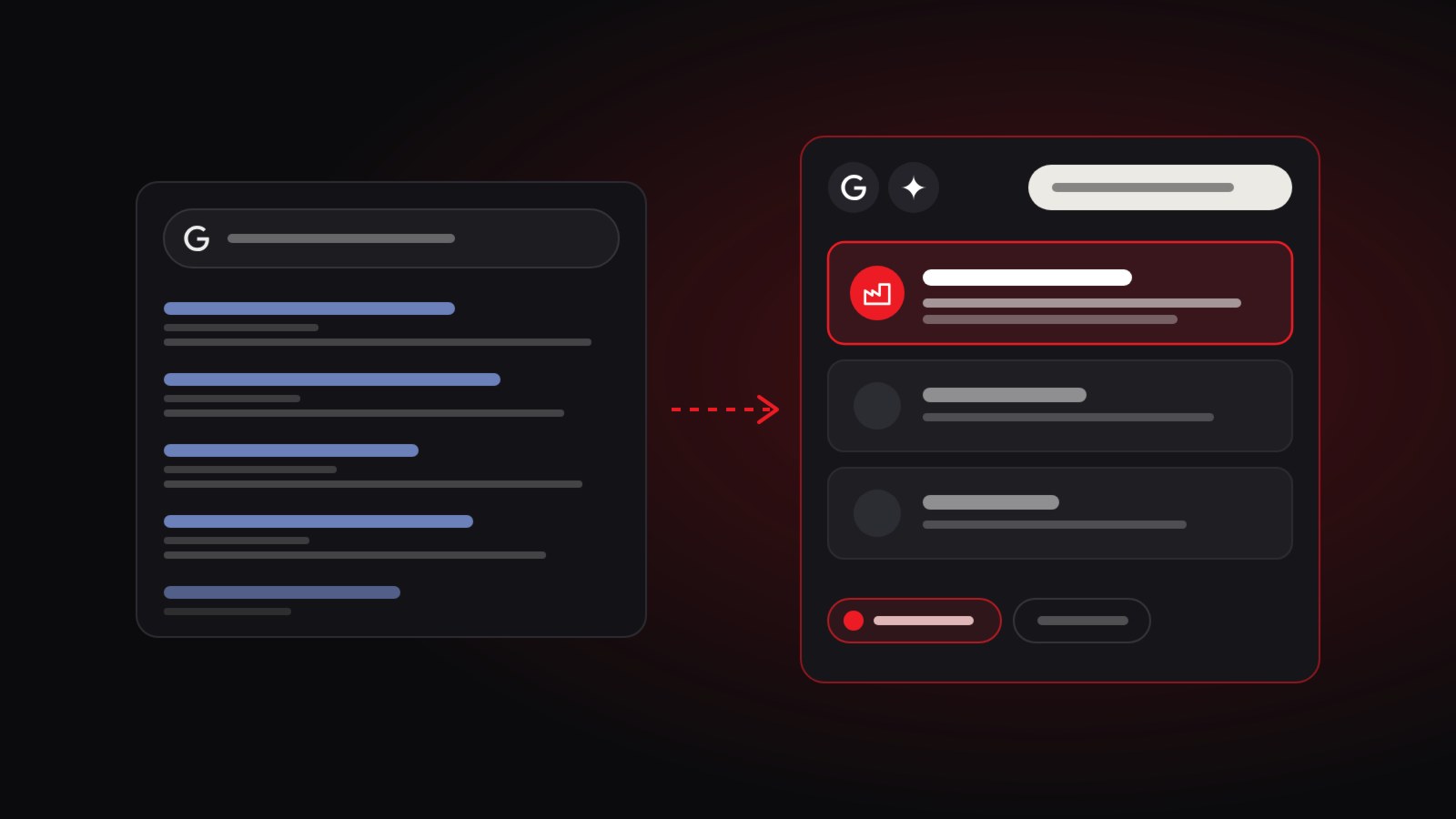
GEO (Generative Engine Optimization) means getting AI such as ChatGPT, Gemini and Google AI Overviews to mention you and cite your pages when they answer a question. It doesn't replace SEO. It adds one thing on top of SEO's foundations: after reading your website, AI can say who you are, what you sell and where you are, and is willing to treat you as a credible source.
This is the overview of TAITAN's GEO / AI visibility series. Each section below has its own article that goes deeper.
The short version
- B2B buyers already use AI to find suppliers. Forrester's research shows that in 2025, 94% of business buyers used AI during the buying process.
- Being recommended by AI rests mostly on the same things as being found by Google: pages must be indexed, content must be text, structure must be clear.
- The difference is being cited. AI prefers content with concrete facts, sources and clear statements.
- The first step isn't changing your website. It's finding out whether you're in AI answers right now.
A buyer's first question is more and more often asked to AI
Buyers looking for suppliers used to start with a Google search and open page after page to compare. Now more and more of them simply ask ChatGPT: "Which factories in Taiwan make stainless steel fasteners?" The AI lists a few names with reasons.
A few numbers show how fast this is moving:
- Forrester: in its 2024 survey, 89% of B2B buyers were already using generative AI in their buying process; in the 2025 Buyers' Journey Survey that rose to 94%.
- Pew Research Center: tracking the real browsing of 900 US adults in 2025, it found that when a Google search showed an AI summary, users clicked a regular search result 8% of the time, against 15% without one.
- Gartner: in 2024 it predicted that by 2026 traditional search engine volume would fall 25%, partly replaced by AI chatbots. It is a prediction, and observers differ on the actual size of the drop, but nobody doubts the direction.
For B2B the meaning is plain: before a buyer opens a single website, the shortlist is already drawn up in the AI's answer. If you aren't on it, however good your website looks, they won't see it.
How SEO and GEO differ
| SEO | GEO | |
|---|---|---|
| Goal | Rank high in Google search results | Be mentioned and cited in AI answers |
| What matters | Keywords, site structure, links, speed | Whether AI understands who you are, whether your content is credible and worth citing |
| What the result looks like | A list of blue links | A paragraph of answer naming a few companies, with sources |
| How it's measured | Rankings, clicks, traffic | Whether you're mentioned, in what position, which pages are cited |
Both stand on the same foundations. Google's documentation is explicit: to appear in AI Overviews and AI Mode there are no additional technical requirements. A page only needs to be indexed and eligible to show with a snippet in search to qualify as a source. Google also notes that you don't need special files or markup just for AI.
ChatGPT is similar. OpenAI explains that ChatGPT search reads pages with a crawler called OAI-SearchBot; if a site blocks it, the site won't appear in ChatGPT's search answers. So the first gate of GEO is actually a basic technical check: can AI's crawlers read you at all?
What kind of content AI prefers to cite
In the paper "GEO: Generative Engine Optimization", presented at KDD 2024, researchers from Princeton and elsewhere systematically tested for the first time which ways of writing AI is more likely to cite. They found that the right techniques could raise a source's visibility in generative engine answers by up to 40%; the stronger methods included citing sources, adding quotations and adding concrete statistics. The effect also varied by industry and type of question.
In B2B terms: concrete facts beat adjectives. "High quality, professional service" carries no information for AI. Materials, size ranges, capacity, certifications and lead times are what it can use to answer a buyer. How to put these on your website is covered point by point in What kind of content does AI cite?
Four places for a B2B company to start
1. Find out whether you're on the shortlist. Ask ChatGPT and Gemini the questions your buyers ask, and see what Google's AI Overviews say: are you mentioned? In what position? Whose pages are cited? The method is in Does your company show up in AI answers?
2. Make sure AI can read you. Does your robots.txt block OAI-SearchBot or Googlebot? Is your important content text, or locked inside images and PDFs? Catalogs are a particularly common problem; see Can Google and AI read the PDF catalogs on your website?
3. Say clearly who you are. Write your company name, products, industry, location and who you serve on the site in plain words, then mark them up with structured data (JSON-LD) so search engines and AI don't have to guess. See What is structured data?
4. Add the content buyers really ask about. Models, specifications, materials, lead times, industries served, common questions. One question, one clear answer is what AI cites most easily. Which pages a whole B2B website needs: What pages does a B2B manufacturing website need?
How TAITAN does GEO
TAITAN's SEO/GEO service starts with a visibility baseline diagnosis: we find where you stand in AI answers today, then line up the content and structured data to add. After that, with Echo, a tool we built ourselves, we regularly put your buyers' questions to ChatGPT, Gemini and Google AI Overviews and track whether you're mentioned, in what position and which pages are cited.
To find out whether you're on the shortlist now, start with a Free Website Check, or book a 360° Diagnosis.
Further reading
GEO / AI visibility series:
- Does your company show up in AI answers? Three ways to check for yourself
- What kind of content does AI cite? 7 ways to get ChatGPT and Gemini to cite your website
- What is structured data, and why does AI need it to read your website?
Other series: What pages does a B2B manufacturing website need?, Why is quoting from drawings slow? Let AI read the engineering drawing first
References
- Aggarwal, P. et al. (2024). GEO: Generative Engine Optimization. KDD 2024.
- Google Search Central. AI features and your website.
- OpenAI. Overview of OpenAI Crawlers.
- Forrester (2026). B2B Buyers Make Zero-Click Buying Number One.
- Pew Research Center (2025). Google users are less likely to click on links when an AI summary appears in the results.
- Gartner (2024). Gartner Predicts Search Engine Volume Will Drop 25% by 2026, Due to AI Chatbots and Other Virtual Agents.